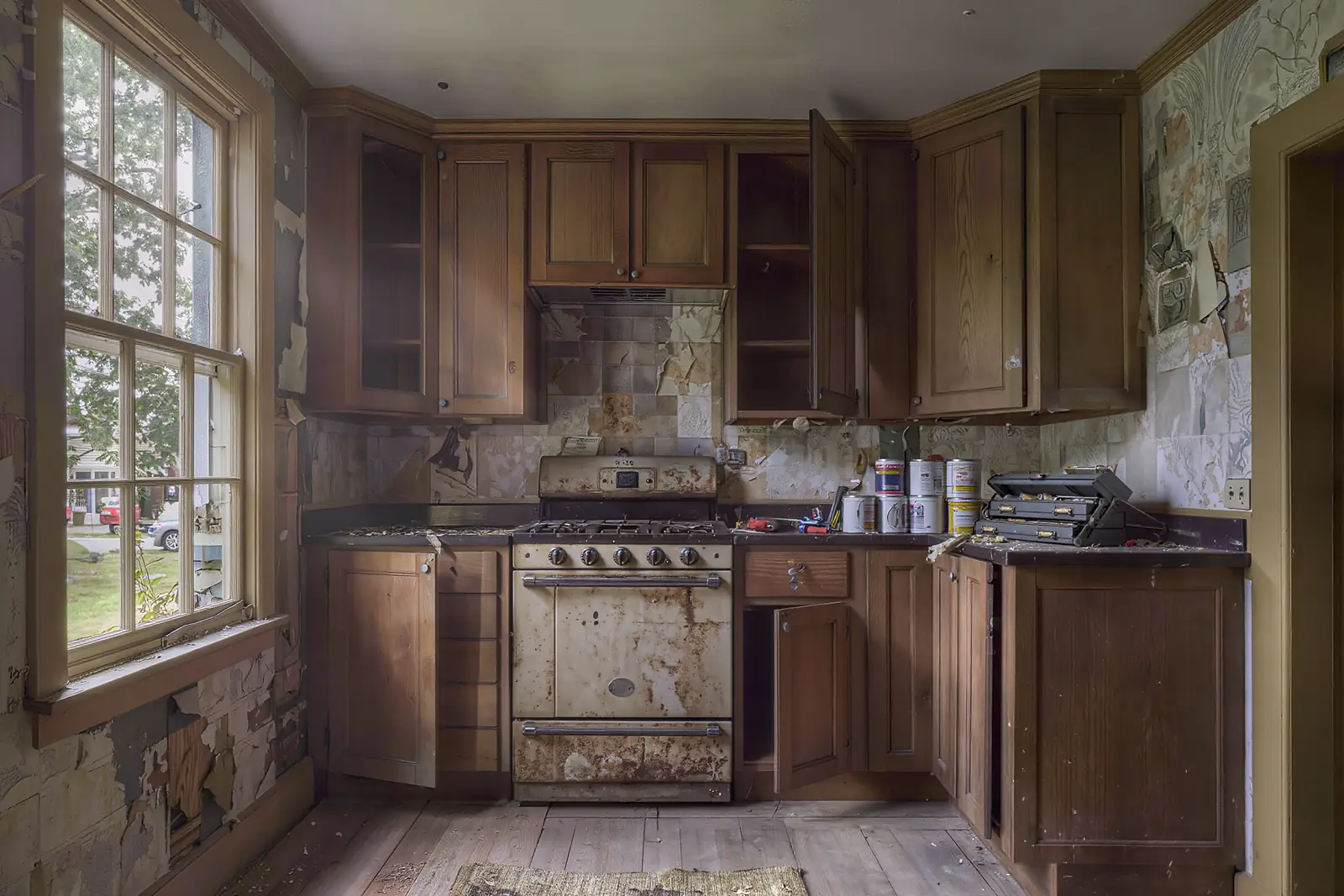
What “as-is” actually means
When a house needs more than you can give it
Every house gets there eventually. The repairs pile up faster than the money to fix them, or the energy, or the years you plan to stay. Sometimes it’s one big thing — a fire, a flooded basement, a foundation report you didn’t want to read. Sometimes it’s twenty small things that together make the house impossible to list.
Because that’s the problem: a traditional buyer almost always needs a mortgage, and a mortgage means an appraisal and an inspection. FHA and VA appraisers will flag peeling paint, a roof near the end of its life, missing handrails or a furnace that fails, and the lender won’t fund until they’re fixed. Even a conventional buyer will come back after the inspection asking for credits or repairs. “Sold as-is” in a listing rarely survives contact with an inspection report.
Selling to us is genuinely as-is. We buy the house in its current condition, we price the repairs into the offer and pay for them after closing, and there is no inspection contingency, no appraisal and no repair negotiation. You don’t clean, you don’t patch, you don’t empty the garage.
Your options
How selling to us works when the house needs major repairs
Tell us what’s wrong — all of it
The more we know up front (roof age, that basement wall, the fire in the kitchen), the more accurate the offer. Nothing you tell us will make us walk away.
A 20-minute walkthrough
We look at the big systems: roof, foundation, mechanicals, water damage, electrical. No need to clean or move anything. Photos work if a visit is hard.
A written offer with the repair math
What the house will be worth fixed up, an honest repair estimate line by line, and our costs. You see exactly how the condition was priced.
Sign when you’re ready
No inspection period that turns into a renegotiation. The number we agree on is the number you get.
Leave it as it stands
Sign at the title company, hand over the keys, and everything the house needs becomes our project.
What we handle so you don’t have to
- Roofs, furnaces, water heaters, electrical panels and plumbing
- Foundation and structural problems, including bowing basement walls
- Fire, smoke, water and storm damage, and mold remediation
- Code violations, open permits and city orders
- Dated kitchens and baths, worn floors, peeling paint — the cosmetic list too
- Clean-out of anything left behind
One honest note: Wisconsin still requires most sellers to give a buyer a Real Estate Condition Report disclosing known defects, even in an as-is sale. Fill it out truthfully — it protects you — and know that nothing you disclose changes whether we buy the house.